
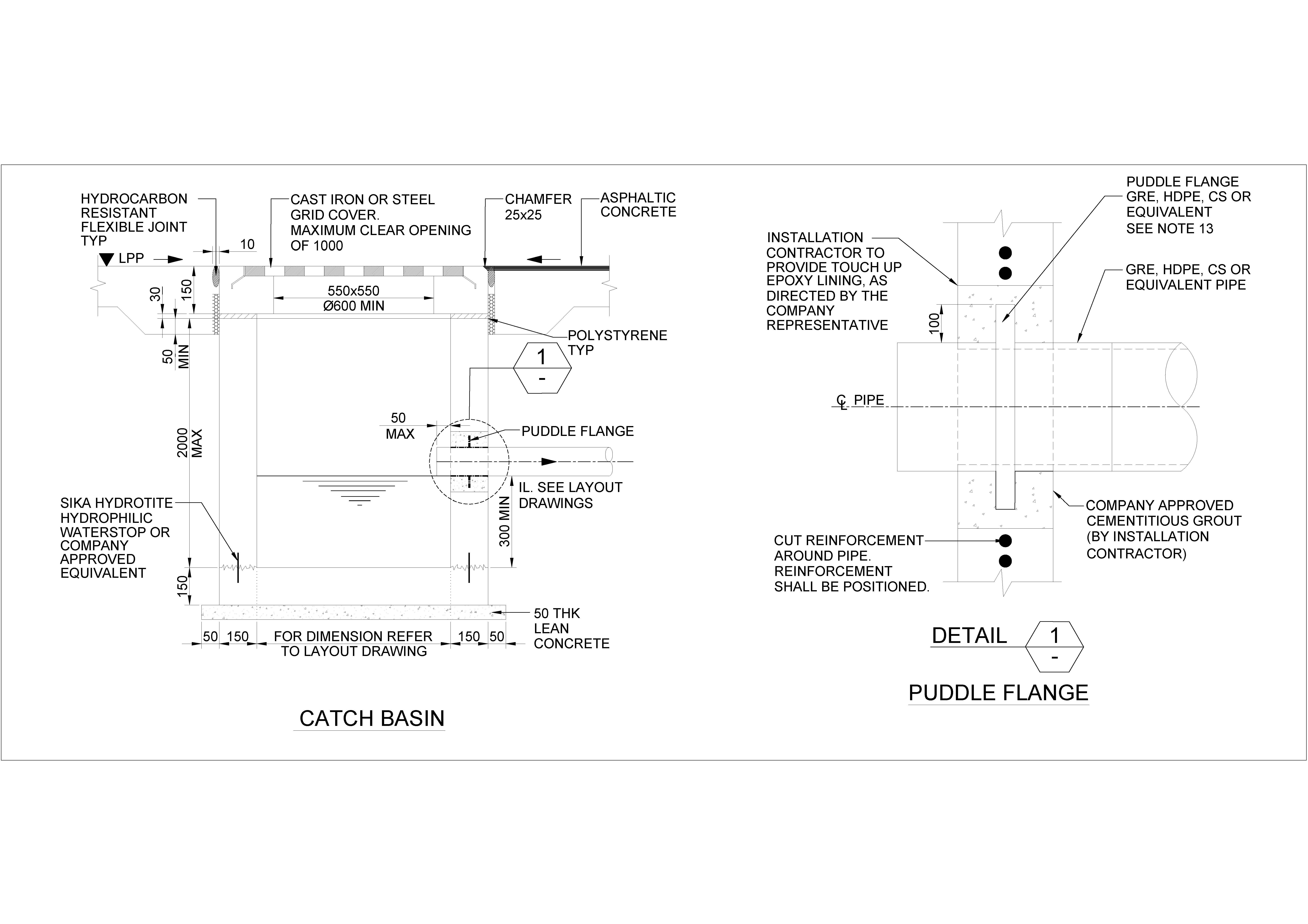
Catch basins are essential components of stormwater management systems. They collect and convey surface water from streets, parking lots, and other paved areas to prevent flooding and water damage. Understanding the types, components, and design considerations of catch basins is crucial for civil engineers, architects, and construction professionals.
What is a Catch Basin?
A catch basin is a drainage structure designed to intercept stormwater runoff and direct it into underground drainage systems. It typically consists of:
- A grate on the top to allow water entry while preventing large debris.
- A basin or sump to temporarily hold water and trap sediments.
- Outlet pipes to connect to the drainage network.
Catch basins not only manage water but also improve water quality by capturing sediments, leaves, and debris before water enters storm drains.


Types of Catch Basins
Catch basins come in various types depending on their design, size, and application:
1. Standard Precast Concrete Catch Basin
- Material: Precast reinforced concrete.
- Use: Common in streets, highways, and commercial areas.
- Features:
- Removable grates.
- Sump depth of 300–600 mm (standard) for sediment collection.
- Outlet pipe connection at the bottom or side.
- Advantages: Durable, resistant to heavy loads, long lifespan.


2. Flat Top Catch Basin
- Design: Top level with surrounding pavement.
- Use: Driveways, parking lots, and pedestrian areas.
- Features: Minimal obstruction to traffic; often used with steel grates.
- Advantages: Reduces trip hazards, easy to clean.
3. Deep Sump Catch Basin
- Design: Extra deep sump for greater sediment accumulation.
- Use: Industrial areas or locations with high sediment load.
- Advantages: Less frequent maintenance, better debris trapping.
4. Combination Catch Basin / Manhole
- Design: Dual-purpose structure functioning as both a manhole and catch basin.
- Use: Locations requiring access to underground pipes for maintenance.
- Advantages: Saves space, simplifies inspection and cleaning.
5. Side Inlet Catch Basin
- Design: Inlet located on the side of the basin instead of the top.
- Use: Along roads with curbs or medians.
- Advantages: Efficient water collection from gutters or roadside channels.
Key Components of a Catch Basin
- Grate / Cover
- Materials: Cast iron, galvanized steel, or polymer concrete.
- Function: Allows water entry while blocking large debris.
- Basin / Sump
- Depth varies (300–600 mm standard, deeper for high sediment areas).
- Traps sediments and slows water flow.
- Outlet / Pipe Connection
- Directs water into stormwater piping.
- Can be side, bottom, or multiple connections.
- Frame
- Supports the grate.
- Adjustable for final pavement level.
Design Considerations
- Hydraulic Capacity: Size of the catch basin should handle peak runoff from the catchment area.
- Sediment Trap Depth: Ensure adequate depth to collect debris and prevent clogging.
- Grate Openings: Small enough to block debris but large enough for water flow.
- Maintenance Access: Removable grates or lids for regular cleaning.
- Load Rating: For roads, parking lots, and pedestrian areas.
Maintenance Tips
- Inspect catch basins regularly, especially after storms.
- Remove accumulated sediments, leaves, and trash.
- Ensure outlet pipes are clear and free-flowing.
- Replace damaged grates or frames promptly.
Catch Basin Plan Symbols
For civil drawings and construction plans, catch basins are represented by specific symbols:
- Square with diagonal lines: Standard catch basin.
- Circle with side line: Side inlet catch basin.
- Double circle: Combination manhole/catch basin.
- Australian Wind Load Calculator as per AS/NZS 1170.2:2021
 Australian Wind Load Calculator | AS/NZS 1170.2:2021 Australian Wind Load… Read more: Australian Wind Load Calculator as per AS/NZS 1170.2:2021
 - Wind Load Calculator as per IS 875 Part 3:2015
 Industrial Shed Wind Load Calculator | IS 875 Part 3:2015… Read more: Wind Load Calculator as per IS 875 Part 3:2015
 - RCC Staircase Detail Drawing free pdf Download
 Reinforced Cement Concrete (RCC) staircases are one of the most… Read more: RCC Staircase Detail Drawing free pdf Download
 - Modern 35×40 House Design with Premium Front Elevation
 Building a dream home on a 35×40 plot is one… Read more: Modern 35×40 House Design with Premium Front Elevation
 - Pipe Rack GA Drawing Layout
 Image – Typical Pipe Rack GA Drawing Explanation The above… Read more: Pipe Rack GA Drawing Layout
 - House Plan 30×40 West Facing | 2BHK Luxury Floor Design |
 Designing a compact yet spacious home on a 30×40 plot… Read more: House Plan 30×40 West Facing | 2BHK Luxury Floor Design |
 - Bund Wall Detail Drawing for Tank Farm and Oil Storage Area
 Introduction A bund wall (also called a dyke wall or… Read more: Bund Wall Detail Drawing for Tank Farm and Oil Storage Area
 - Dyke Wall Layout and Detail | Oil Tank Containment Systems |
 Introduction A dyke wall (also called a bund wall or… Read more: Dyke Wall Layout and Detail | Oil Tank Containment Systems |
 - Apartment Plan 28×32 West Facing with Modern Elevation
 This project showcases a well-planned 30×40 west-facing apartment design featuring… Read more: Apartment Plan 28×32 West Facing with Modern Elevation
 - How to Assign LY and LZ in STAAD for Steel Structures (With and Without Bracing)
 🔹 What is LY and LZ? In STAAD.Pro: These define… Read more: How to Assign LY and LZ in STAAD for Steel Structures (With and Without Bracing)
 - HOUSE PLAN 35 X 41 | EAST FACING |
 Designing a perfect home requires a balance of functionality, aesthetics,… Read more: HOUSE PLAN 35 X 41 | EAST FACING |
 - EDG Building Power Cable Layout with MTO Guide
 Introduction An Emergency Diesel Generator (EDG) system is a critical… Read more: EDG Building Power Cable Layout with MTO Guide
 - HOUSE PLAN EAST FACING 30 X 40
 Designing a compact yet functional home on a 30’ x… Read more: HOUSE PLAN EAST FACING 30 X 40
 - Septic Tank Drawing and Details
 Septic tanks are widely used in residential buildings for on-site… Read more: Septic Tank Drawing and Details
 - Holding Tank Detail
 Introduction A holding tank, also known as a water sump… Read more: Holding Tank Detail
 - Rain Water Harvesting System pdf Book Download
 TABLE OF CONTENTS 1.0 INTRODUCTION 3 2.0 CHAPTER 1 4… Read more: Rain Water Harvesting System pdf Book Download
 - Galvanized Gate | Design Details and Specifications Guide |
 Introduction Industrial galvanized gates are designed for heavy-duty usage, high… Read more: Galvanized Gate | Design Details and Specifications Guide |
 - Soak Pit Details | Seepage Pit |
 Introduction A soak pit or seepage pit (also called a… Read more: Soak Pit Details | Seepage Pit |
 - HOUSE PLAN 25 X 48 | SOUTH FACING |
 Project Overview This 25’ x 48’ South Facing G+1 house… Read more: HOUSE PLAN 25 X 48 | SOUTH FACING |
 - Expansion, Contraction and Construction Joints in Concrete for Civil Works
 1. Introduction Concrete is one of the most widely used… Read more: Expansion, Contraction and Construction Joints in Concrete for Civil Works
 - Modern 4BHK West Facing House Plan (60×50) with Pool & Luxury 3D Design
 ✨ Overview of the House Design This 60×50 west-facing modern… Read more: Modern 4BHK West Facing House Plan (60×50) with Pool & Luxury 3D Design
 - Cable Rack Structural Steel Detail and Design
 Introduction Cable racks (also called cable trays or cable support… Read more: Cable Rack Structural Steel Detail and Design
 - RCC Shear Wall Details
 Introduction Reinforced Cement Concrete (RCC) shear walls are one of… Read more: RCC Shear Wall Details
 - RCC Column with Splice and Coupler in Reinforcement Free Download
 Introduction Reinforced Cement Concrete (RCC) columns are one of the… Read more: RCC Column with Splice and Coupler in Reinforcement Free Download
 - Repair Principles for Corrosion Damaged Reinforced Concrete Structures
 Reinforced concrete is one of the most widely used construction… Read more: Repair Principles for Corrosion Damaged Reinforced Concrete Structures