
Tag: Civil Engineering Blog
-
Canadian Beam Design Calculator | Beam Load Calculator
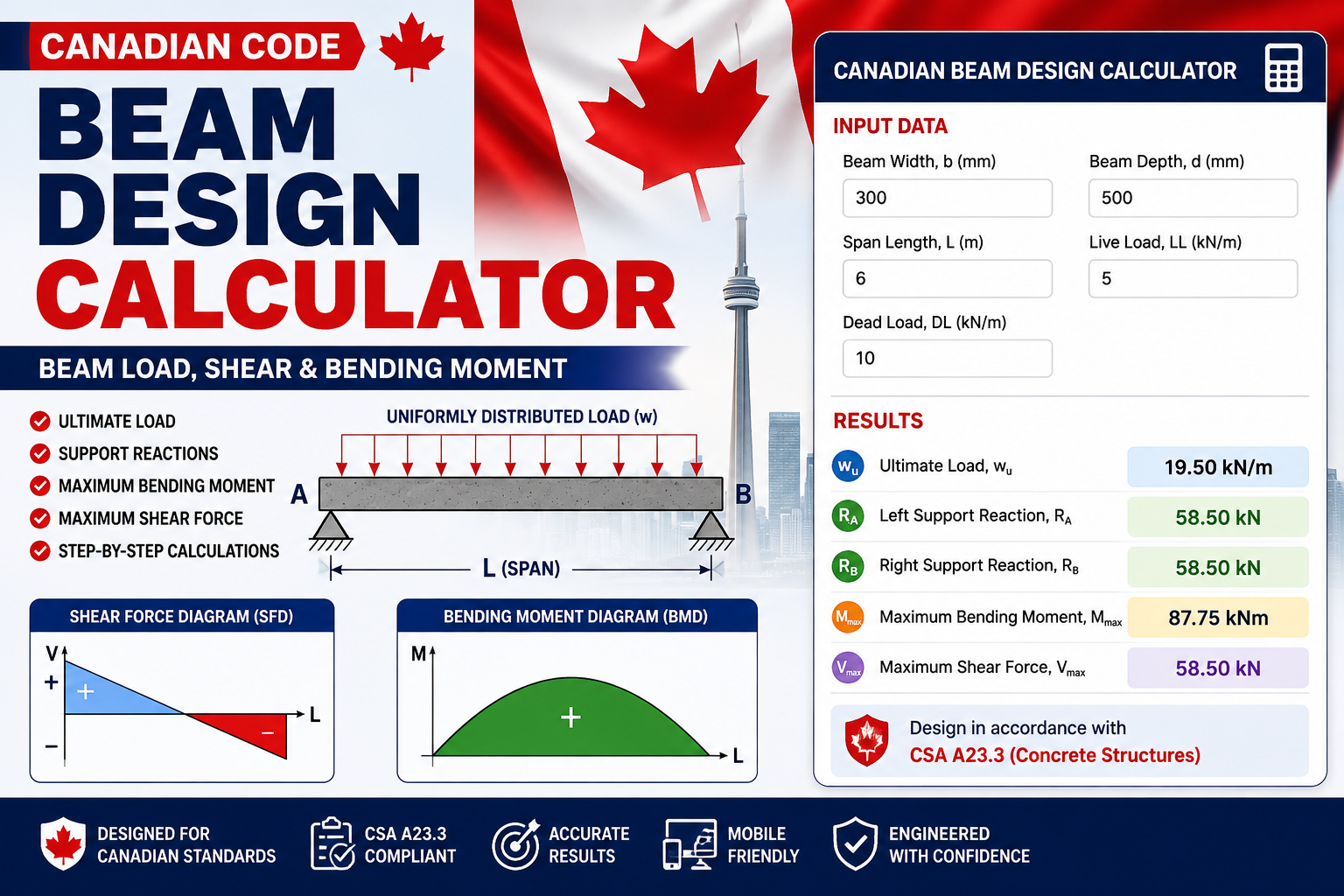
The Canadian Beam Design Calculator is a free online engineering tool designed to help structural engineers, civil engineers, students, and construction professionals quickly calculate the primary actions in a simply supported beam subjected to a uniformly distributed load (UDL). Simply enter the beam span, dead load, and live load to automatically calculate the ultimate design… Read more
-
Australian Beam Design Calculator | Beam Load Calculator
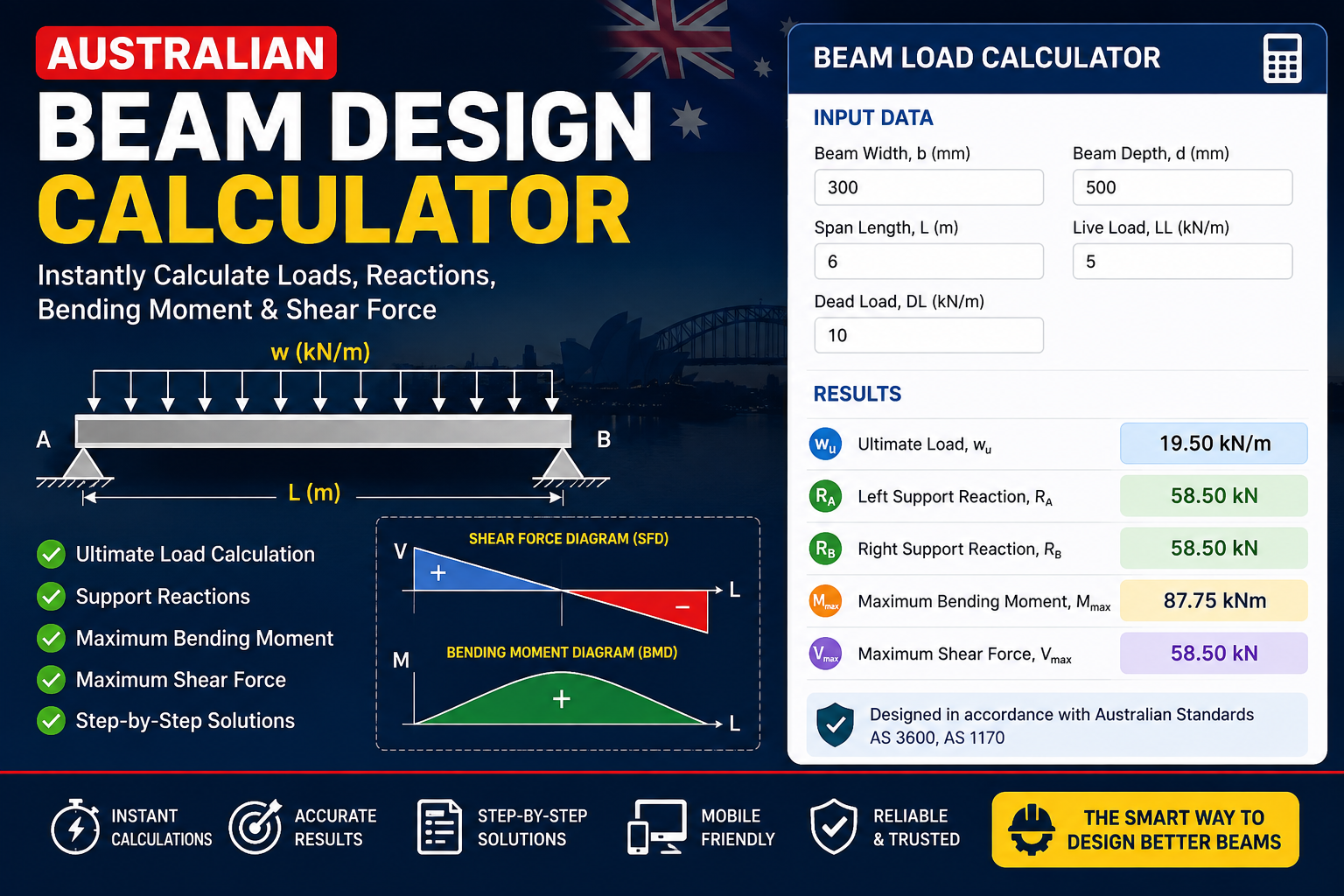
Australian Beam Design Calculator – Free Online Beam Load, Shear & Bending Moment Calculator The Australian Beam Design Calculator is a simple and easy-to-use online engineering tool that helps engineers, students, designers, and contractors quickly determine the primary actions on a simply supported beam subjected to a uniformly distributed load (UDL). Simply enter the beam… Read more
-
Manhole Cover Detail
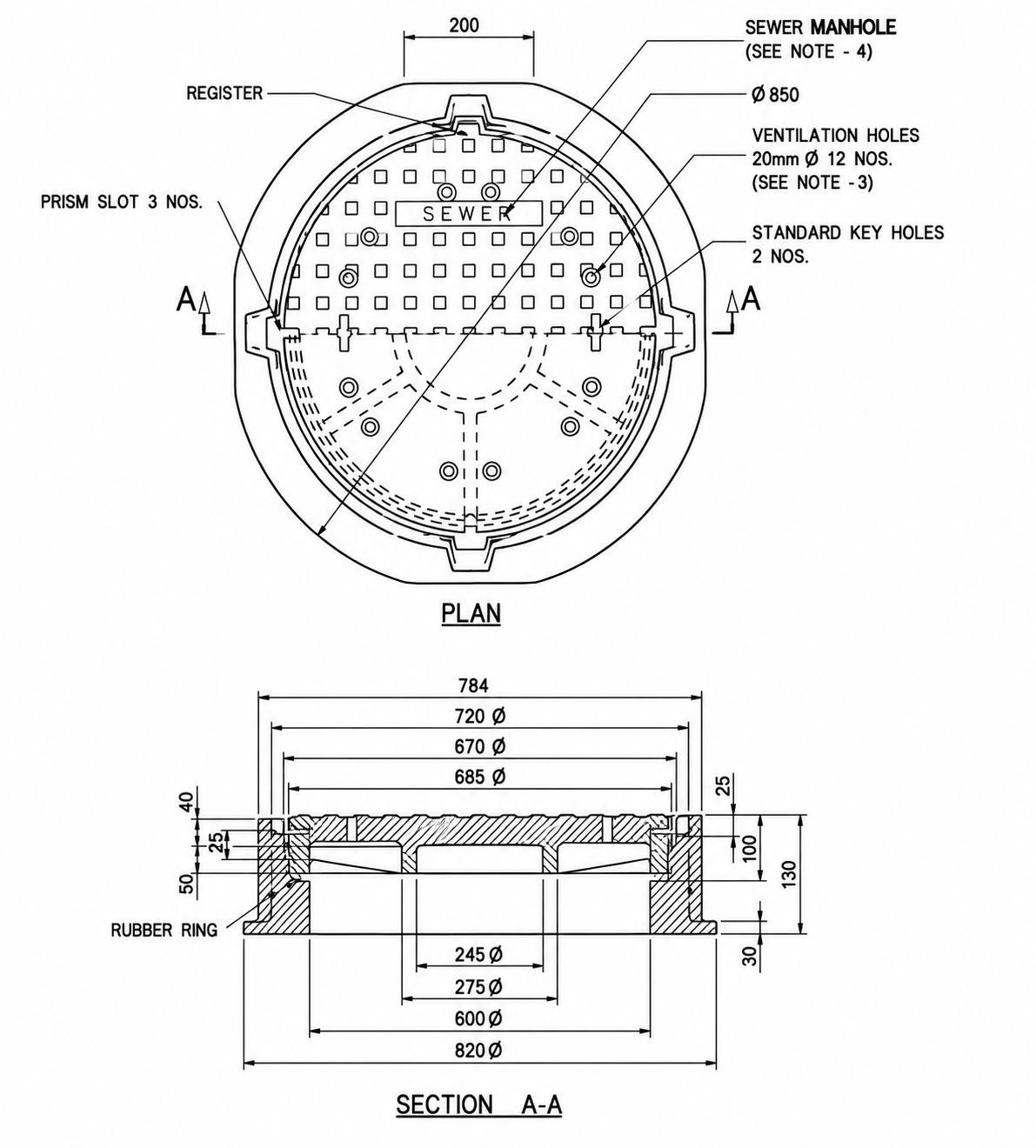
Manhole covers are one of the most important components in underground utility infrastructure. They provide safe access to sewer systems, stormwater drains, electrical ducts, telecommunication chambers, and water supply pipelines while protecting pedestrians and vehicles from open utility chambers. Selecting the correct manhole cover depends on several engineering factors including load capacity, traffic conditions, chamber… Read more
-
Circular Pipe Base Plate Design | AISC ASD Guide + PDF Download
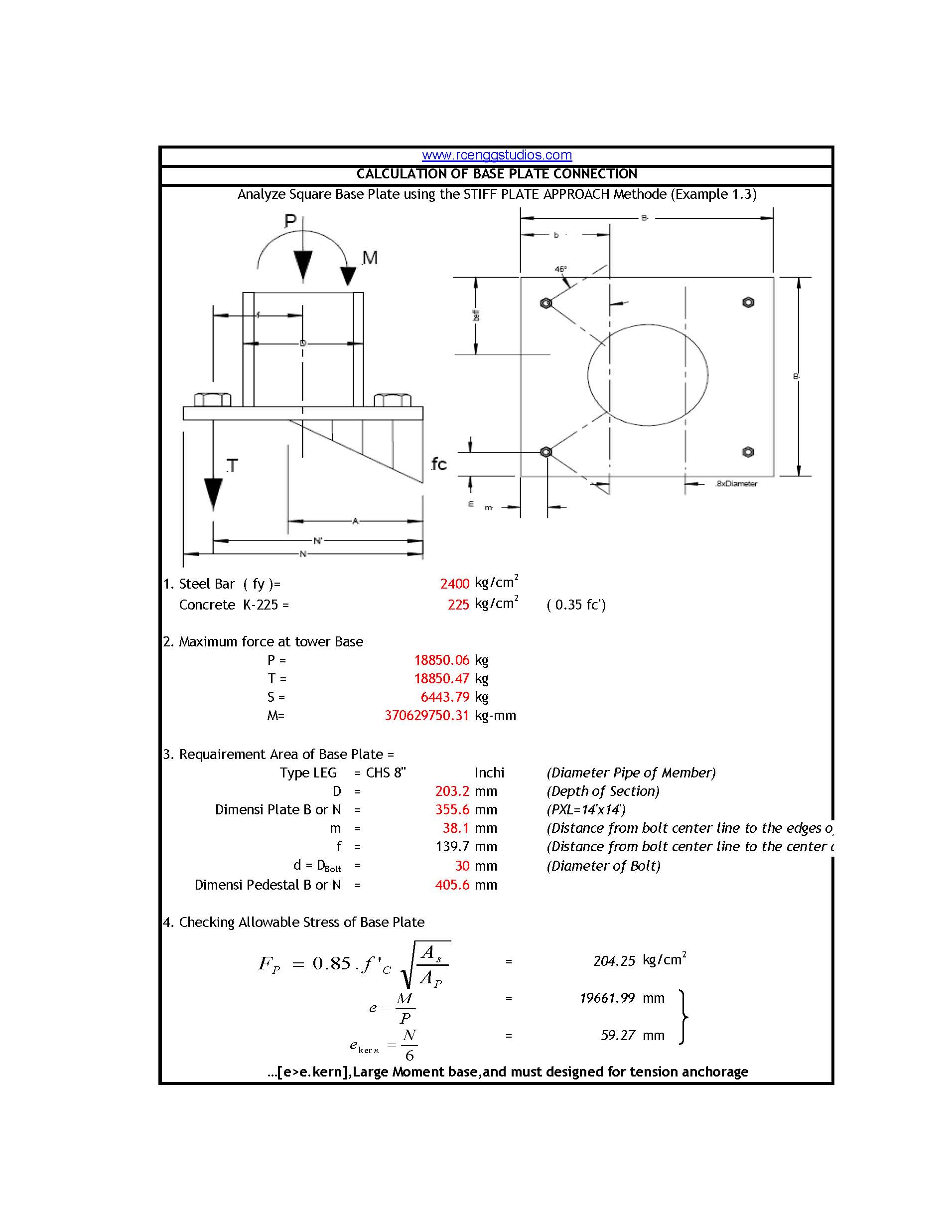
Introduction The base plate is one of the most important structural components in a steel structure because it transfers loads from the steel pipe column to the reinforced concrete pedestal. A properly designed base plate ensures that axial compression, bending moments, shear forces, and uplift loads are safely transmitted into the foundation without exceeding the… Read more
-
Expansion Joints in Concrete Pavements
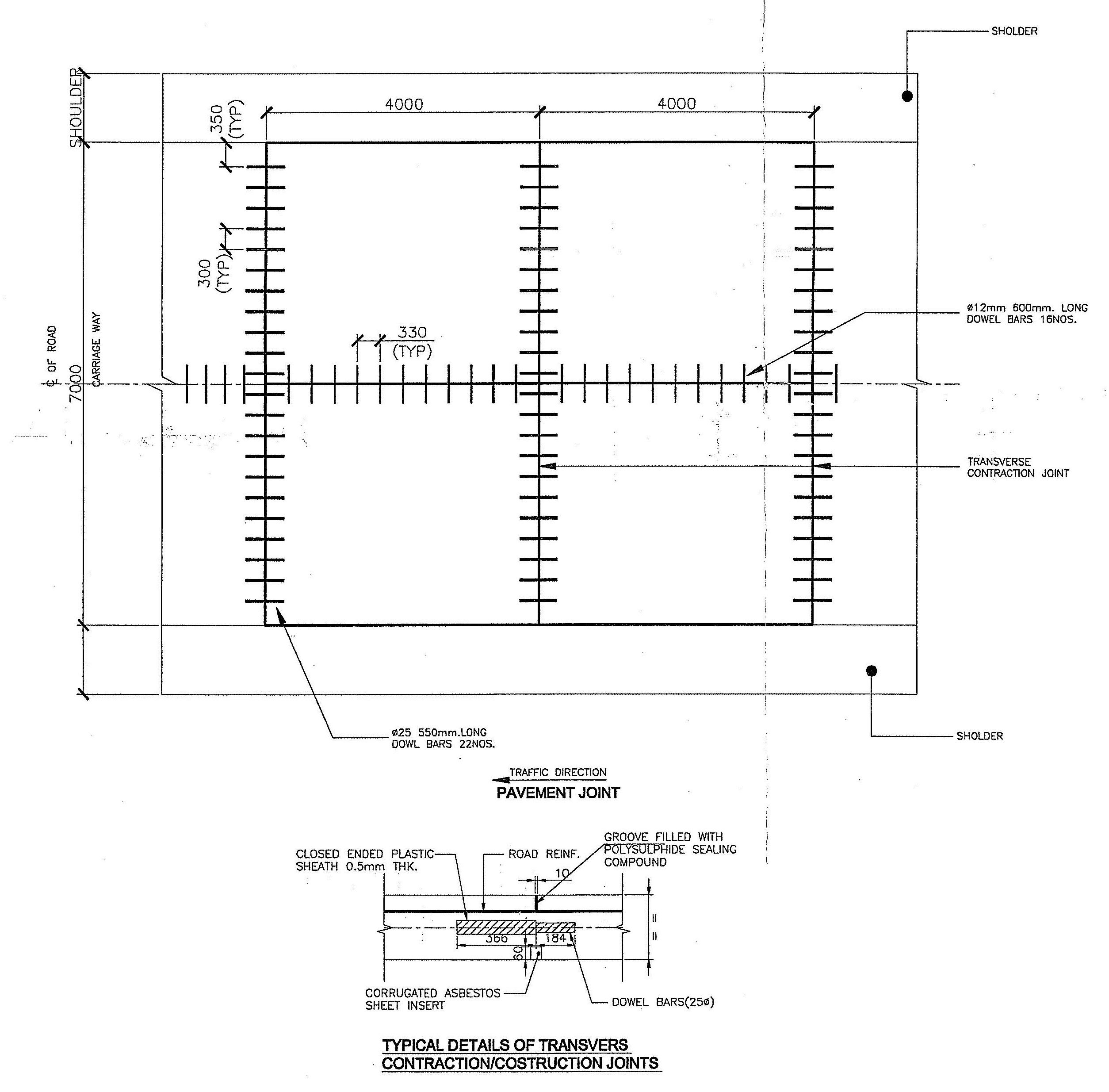
Concrete pavements are designed to withstand heavy traffic loads, temperature variations, and environmental stresses over many years. One of the most critical aspects of rigid pavement design is the proper provision of expansion joints, contraction joints, and longitudinal joints. These joints control cracking, accommodate thermal movement, and ensure the long-term durability of the pavement. The… Read more
-
Dyke Wall Layout and Detail | Oil Tank Containment Systems |
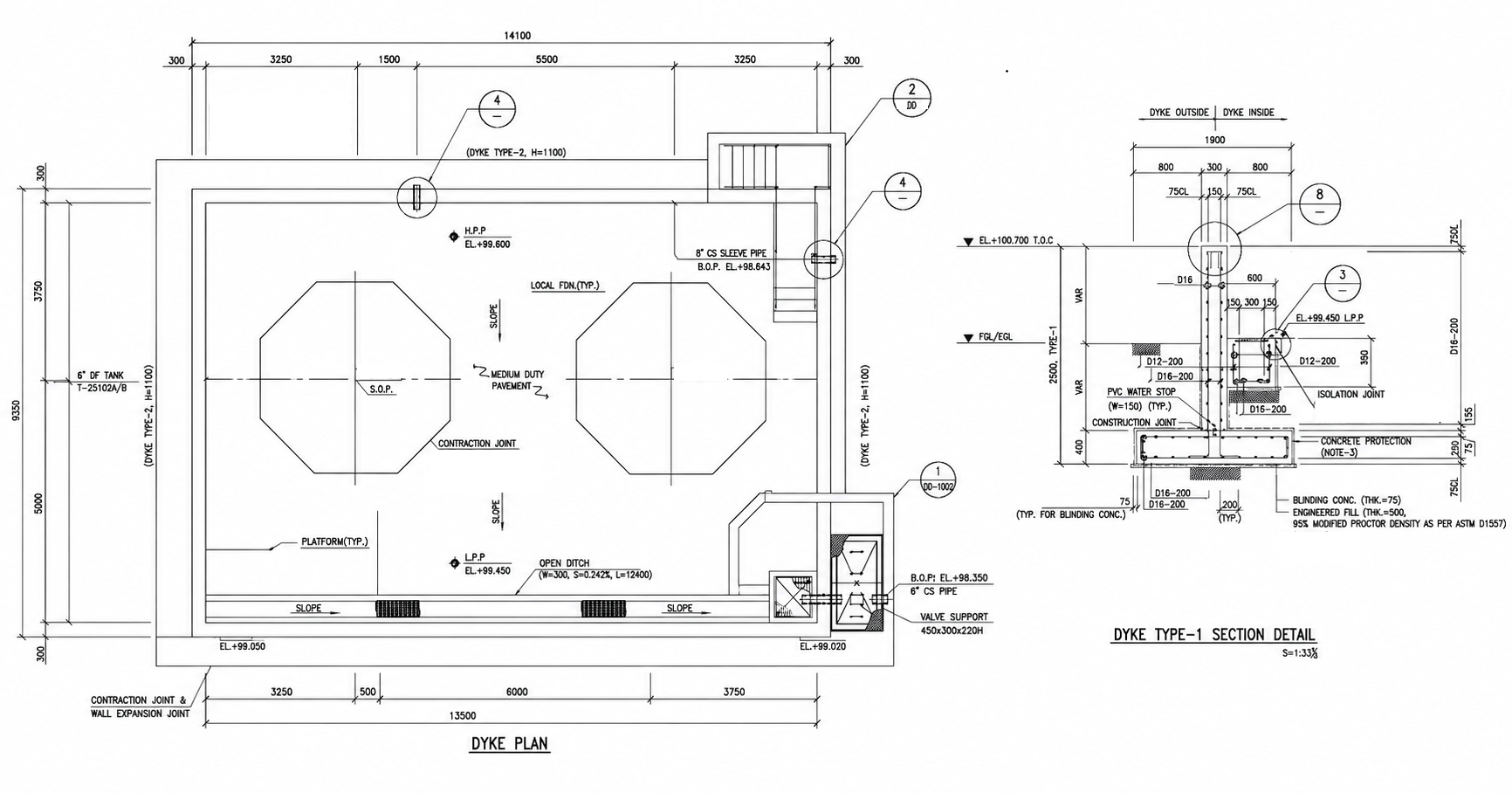
Introduction A dyke wall (also called a bund wall or containment wall) is a reinforced concrete or masonry protective structure constructed around storage tanks, pumps, transformers, or hazardous liquid handling areas. The main purpose of a dyke wall is to contain accidental leakage, oil spills, or chemical overflow and prevent environmental contamination. The above drawing… Read more
-
Septic Tank Drawing and Details
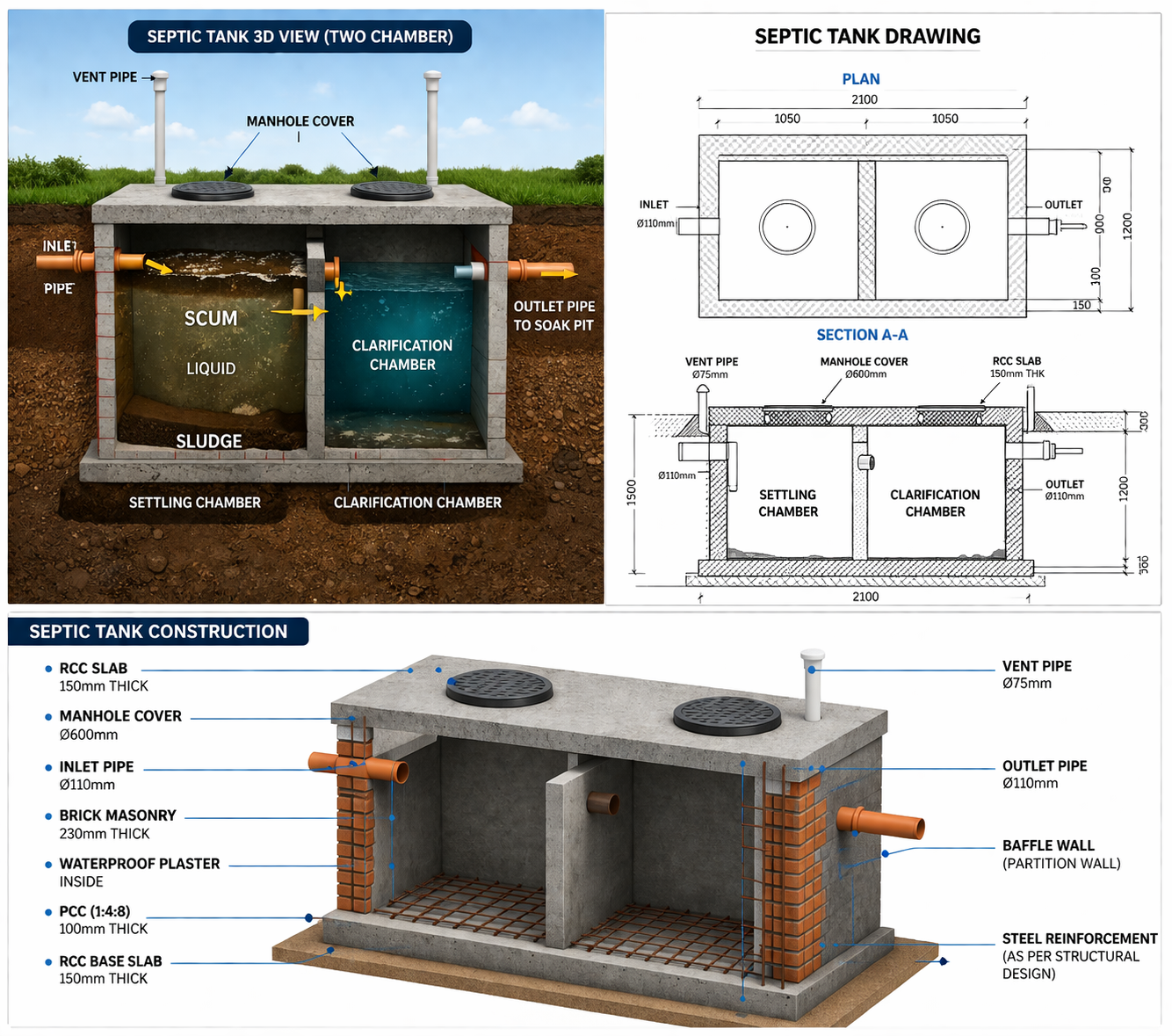
Septic tanks are widely used in residential buildings for on-site wastewater treatment where municipal drainage is not available. A properly designed septic tank ensures hygienic disposal, durability, and low maintenance. Standard Residential Plan (5–6 Members) Typical Dimensions: 🔹 Layout Details: 👉 Flow Direction:Toilet → Inlet → Chamber 1 → Chamber 2 → Outlet → Soak… Read more
-
Holding Tank Detail
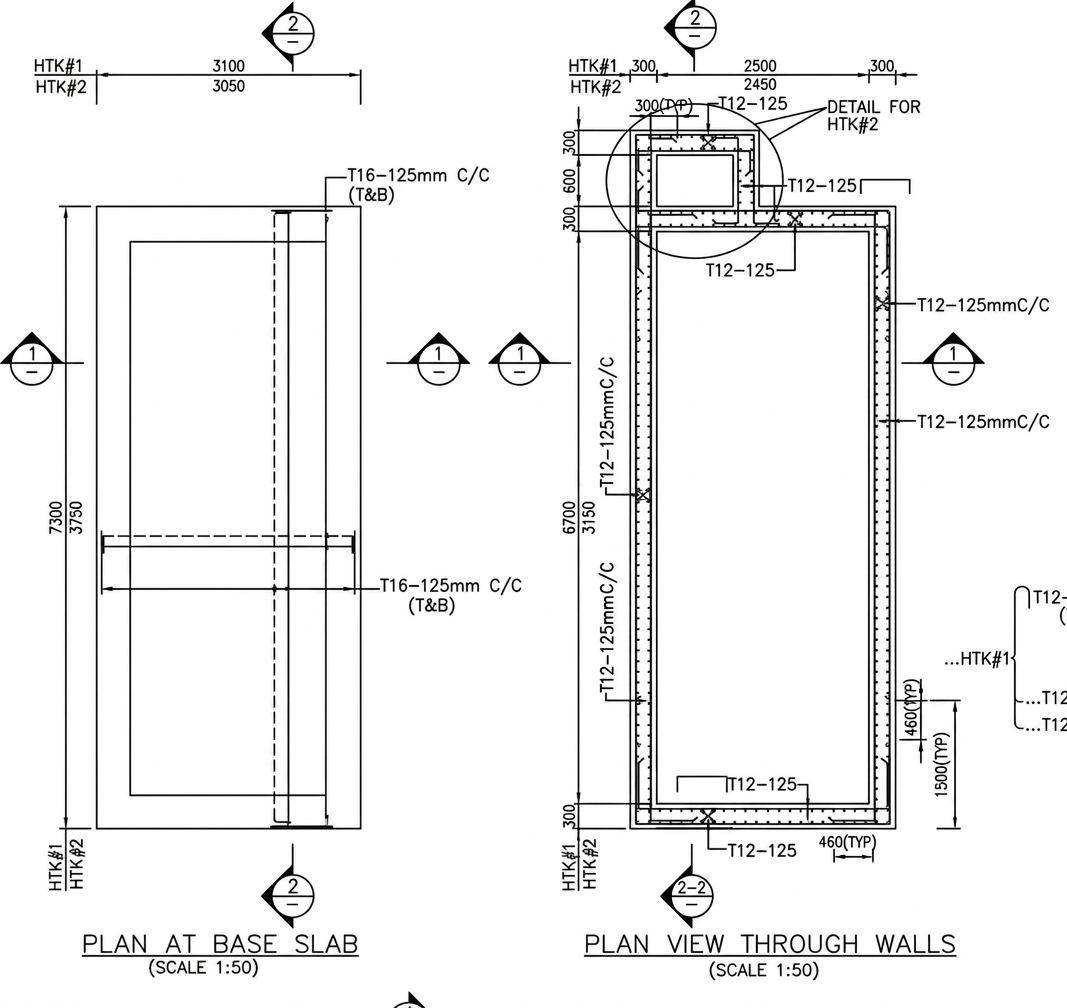
Introduction A holding tank, also known as a water sump tank or underground storage tank, is an essential structure used to store water for domestic, commercial, and industrial purposes. It ensures a continuous water supply, especially in areas with irregular water availability. This guide explains design principles, construction details, reinforcement, and best practices based on… Read more
-
Expansion, Contraction and Construction Joints in Concrete for Civil Works
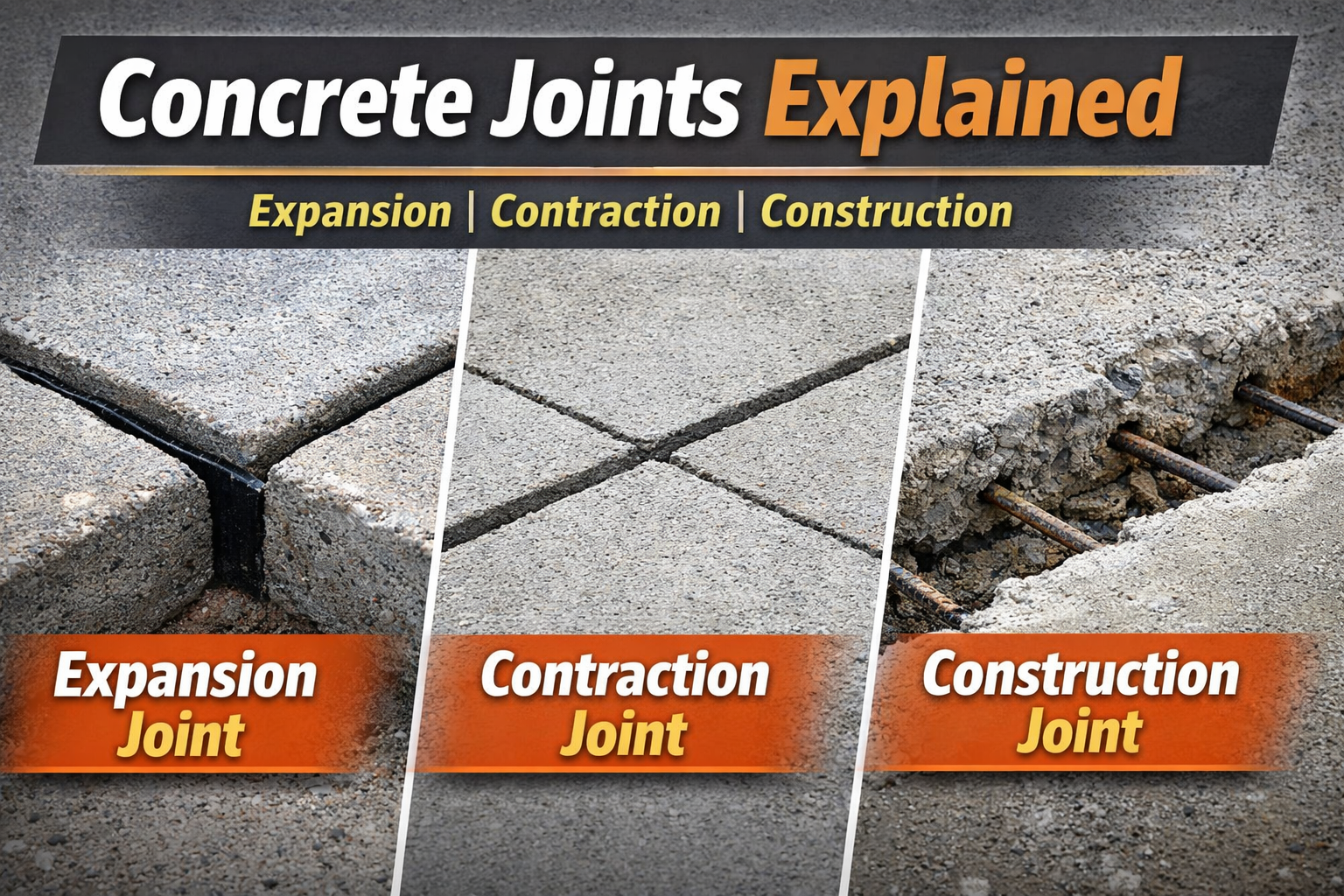
1. Introduction Concrete is one of the most widely used construction materials in civil engineering due to its strength, durability, and versatility. However, it is not immune to cracking. Cracks develop due to temperature variations, drying shrinkage, creep, and structural loads. If these cracks are not controlled, they can lead to: To manage and control… Read more
-
RCC Column with Splice and Coupler in Reinforcement Free Download
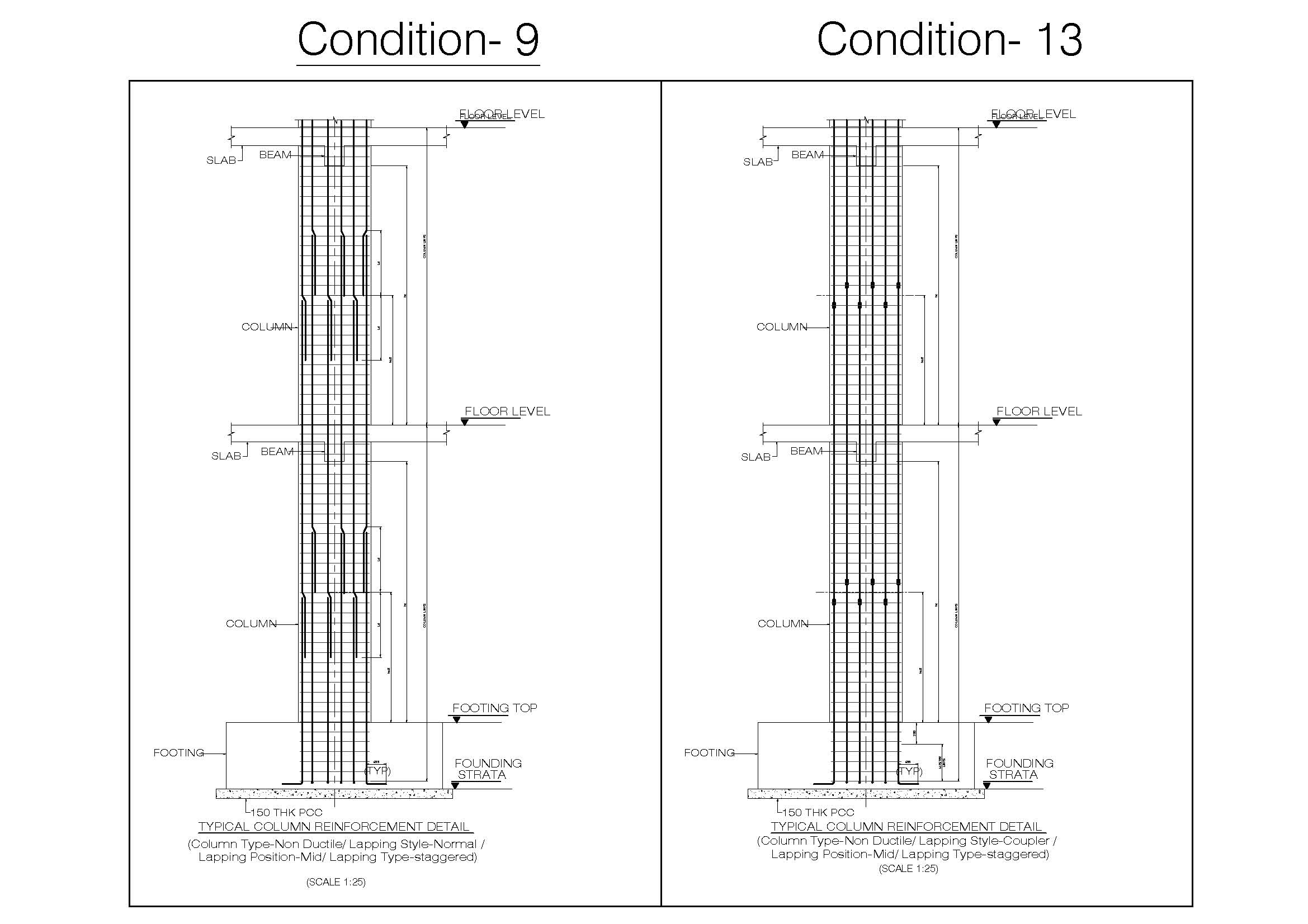
Introduction Reinforced Cement Concrete (RCC) columns are one of the most important structural components in buildings. They transfer loads from beams and slabs to the foundation safely. Proper reinforcement detailing is essential to ensure strength, durability, and stability of the column. In RCC column construction, reinforcement bars are often connected using lap splices or mechanical… Read more
-
Catch Basin Types and Details
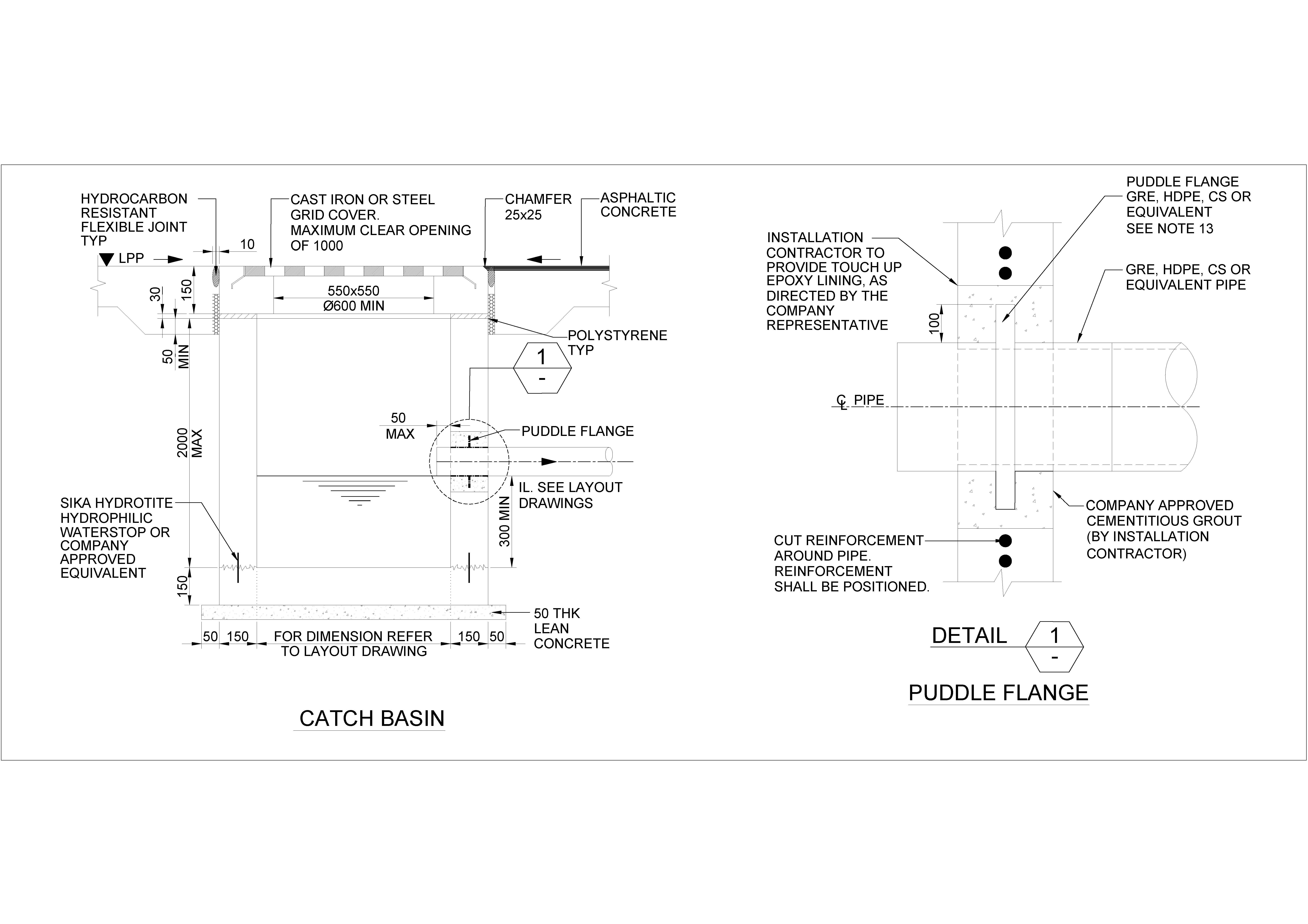
Catch basins are essential components of stormwater management systems. They collect and convey surface water from streets, parking lots, and other paved areas to prevent flooding and water damage. Understanding the types, components, and design considerations of catch basins is crucial for civil engineers, architects, and construction professionals. What is a Catch Basin? A catch… Read more
-
Base Plate Design as per IS 800 2007

Introduction (Anchor Bolts Outside & Inside Column Flange) Base plates are critical steel connection elements used to safely transfer axial load, bending moment, and shear force from a steel column to the concrete foundation.As per IS 800:2007 – General Construction in Steel, base plate design ensures adequate bearing, bending resistance, and anchorage safety. This article… Read more
-
Analysis and Design of Drain Sump Pit

Introduction A sump pit, commonly used in buildings, industrial plants, and utility areas, serves as an underground water collection tank designed to temporarily store rainwater, wastewater, or stormwater. Proper structural and RCC design of a sump pit is crucial to withstand soil pressure, groundwater uplift, and water-retaining conditions. This document outlines the structural analysis, RCC… Read more
-
Ring Wall Foundation Design

✅ Overview A Ring Wall Foundation is a circular or polygonal concrete foundation, commonly used to support vertical cylindrical structures such as storage tanks, silos, chimneys, or wind towers. It provides uniform load distribution and stability against uplift, settlement, and sliding. 🧱 What is a Ring Wall Foundation? Ring wall foundation is a closed-loop footing,… Read more
-
PILE STIFFNESS CALCULATION

STAAD INPUT FOR SUPPORT CONDITION VERTICAL STIFFNESSAllowable vertical settlement = 12 mmAllowable vertical load (2000*1.5) = 3000 kN Cl. 6.1.5, IS:2911 (Part 4)-1985 Vertical stiffness = 3000×103/12= 250000 kN/m Horizontal STIFFNESSAllowable lateral deflection = 5 mmAllowable lateral force = 120 kN Cl. 7.4, IS:2911 (Part 4)-1985Horizontal stiffness = 120×103/5= 24000 kN/m Error! Filename not specified.… Read more