
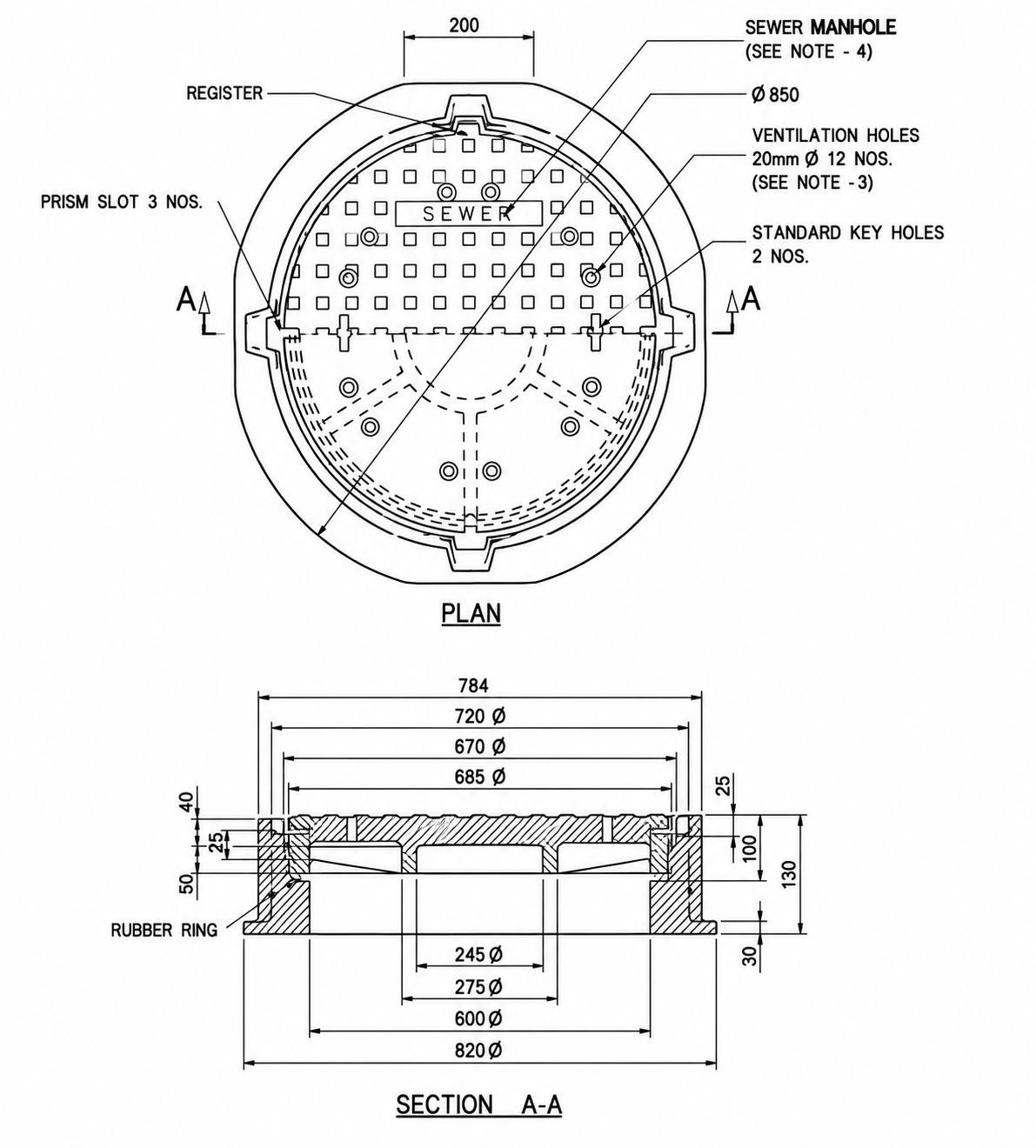
Manhole covers are one of the most important components in underground utility infrastructure. They provide safe access to sewer systems, stormwater drains, electrical ducts, telecommunication chambers, and water supply pipelines while protecting pedestrians and vehicles from open utility chambers.
Selecting the correct manhole cover depends on several engineering factors including load capacity, traffic conditions, chamber size, material type, and applicable design standards. An improperly selected cover may fail under heavy loads, resulting in costly repairs and safety hazards.
This guide explains everything civil engineers, contractors, architects, and homeowners need to know about manhole cover details.
What is a Manhole Cover?


A manhole cover is a removable lid placed over the opening of an underground inspection chamber. It allows maintenance personnel to inspect, clean, repair, and maintain underground utilities while preventing accidental falls and unauthorized access.
Typical applications include:
- Sewer Lines
- Storm Water Drainage
- Water Supply Networks
- Cable Ducts
- Electrical Chambers
- Telecommunication Networks
- Industrial Utility Lines
- Oil & Gas Utility Chambers
Main Components of a Manhole Cover
A complete manhole cover assembly generally consists of:
1. Cover
The removable top plate designed to withstand the specified traffic load.
2. Frame
The fixed supporting ring embedded into concrete or masonry.
3. Seating Surface
Provides proper load transfer between the cover and frame.
4. Locking Arrangement (Optional)
Used in airports, highways, industrial plants, and secure installations.
5. Anti-Skid Surface
Prevents slipping during rainy conditions.
Types of Manhole Covers
Circular Manhole Cover
The most commonly used type worldwide.
Advantages
- Cannot fall into the opening
- Uniform load distribution
- Easy handling
- Excellent durability
Applications
- Sewer Systems
- Roads
- Highways
- Municipal Drainage
Square Manhole Cover
Used where chamber geometry is square.
Applications
- Utility Chambers
- Electrical Chambers
- Cable Trenches
Advantages
- Easier equipment installation
- Larger access opening
Rectangular Manhole Cover
Mostly used in cable ducts and utility tunnels.
Applications
- Electrical Panels
- Telecom Chambers
- Utility Corridors
Recessed Manhole Cover
Allows floor finishes or paving blocks to be installed inside the cover.
Applications
- Shopping Malls
- Hotels
- Landscapes
- Decorative Pavements
Airtight Manhole Cover
Designed to prevent odor and gas leakage.
Applications
- Sewage Pump Rooms
- Chemical Plants
- Water Treatment Plants
Common Materials
Ductile Iron
Most popular material.
Advantages
- High tensile strength
- Excellent impact resistance
- Long service life
- Corrosion resistant
Cast Iron
Traditional material used for many decades.
Advantages
- Economical
- Heavy duty
- Good wear resistance
Composite (FRP)
Modern lightweight alternative.
Advantages
- Rust proof
- Lightweight
- Theft resistant
- Electrically non-conductive
Stainless Steel
Used in hygienic environments.
Applications
- Food Industries
- Pharmaceutical Plants
- Hospitals
Standard Manhole Cover Sizes
Typical clear openings include:
| Clear Opening | Common Use |
|---|---|
| 300 mm | Inspection Chambers |
| 450 mm | Small Utility Chambers |
| 600 mm | Residential Sewers |
| 750 mm | Municipal Drainage |
| 900 mm | Large Utility Chambers |
| 1000 mm | Industrial Applications |
Actual dimensions vary depending on the manufacturer and project specifications.
EN 124 Load Classes
Choosing the correct load class is essential for safety and durability.
| Class | Load Capacity | Typical Application |
|---|---|---|
| A15 | 15 kN | Footpaths, gardens |
| B125 | 125 kN | Car parks |
| C250 | 250 kN | Road shoulders |
| D400 | 400 kN | Public roads and highways |
| E600 | 600 kN | Industrial yards |
| F900 | 900 kN | Airports and docks |
Installation Procedure
Proper installation ensures long service life and prevents premature failure.
Step 1
Prepare the chamber opening.
Step 2
Install the frame level with the finished road surface.
Step 3
Use cement mortar or non-shrink grout beneath the frame.
Step 4
Allow proper curing.
Step 5
Install the cover.
Step 6
Check for proper seating and stability.
Advantages of Quality Manhole Covers
- High structural strength
- Long service life
- Anti-skid surface
- Corrosion resistance
- Low maintenance
- Easy installation
- Heavy traffic resistance
- Improved public safety
- Weather resistant
- Theft-resistant options available
Common Engineering Standards
Various international standards govern the design and performance of manhole covers:
- EN 124
- IS 1726
- BS EN 124
- ASTM Standards
- AASHTO Guidelines
- Local Municipal Specifications
Maintenance Tips
Regular inspections can significantly extend the life of manhole covers.
- Inspect annually for cracks or deformation.
- Clean debris from the seating surface.
- Ensure the frame remains level with the pavement.
- Replace damaged or loose covers immediately.
- Lubricate locking mechanisms where applicable.
Applications
Manhole covers are widely used in:
- Residential Buildings
- Commercial Buildings
- Industrial Plants
- Municipal Roads
- Highways
- Airports
- Ports
- Water Treatment Plants
- Sewer Networks
- Storm Water Drainage
- Electrical Infrastructure
- Telecom Networks
Frequently Asked Questions (FAQs)
Which material is best for a manhole cover?
Ductile iron is the preferred choice for most road applications due to its high strength and durability, while composite covers are ideal where corrosion resistance and theft prevention are important.
What is the difference between cast iron and ductile iron?
Ductile iron has significantly higher tensile strength, better impact resistance, and longer service life than traditional cast iron.
Which load class is suitable for highways?
Class D400 is commonly used for public roads and highways, while heavier-duty areas may require E600 or F900.
Why are most manhole covers circular?
Circular covers cannot fall through their openings, distribute loads evenly, and are easier to handle during maintenance.
How often should manhole covers be inspected?
Routine inspections are recommended at least once a year, or more frequently in high-traffic or industrial areas.
Leave a Reply