
Tag: Civil Engineering Blog
-
Catch Basin Types and Details
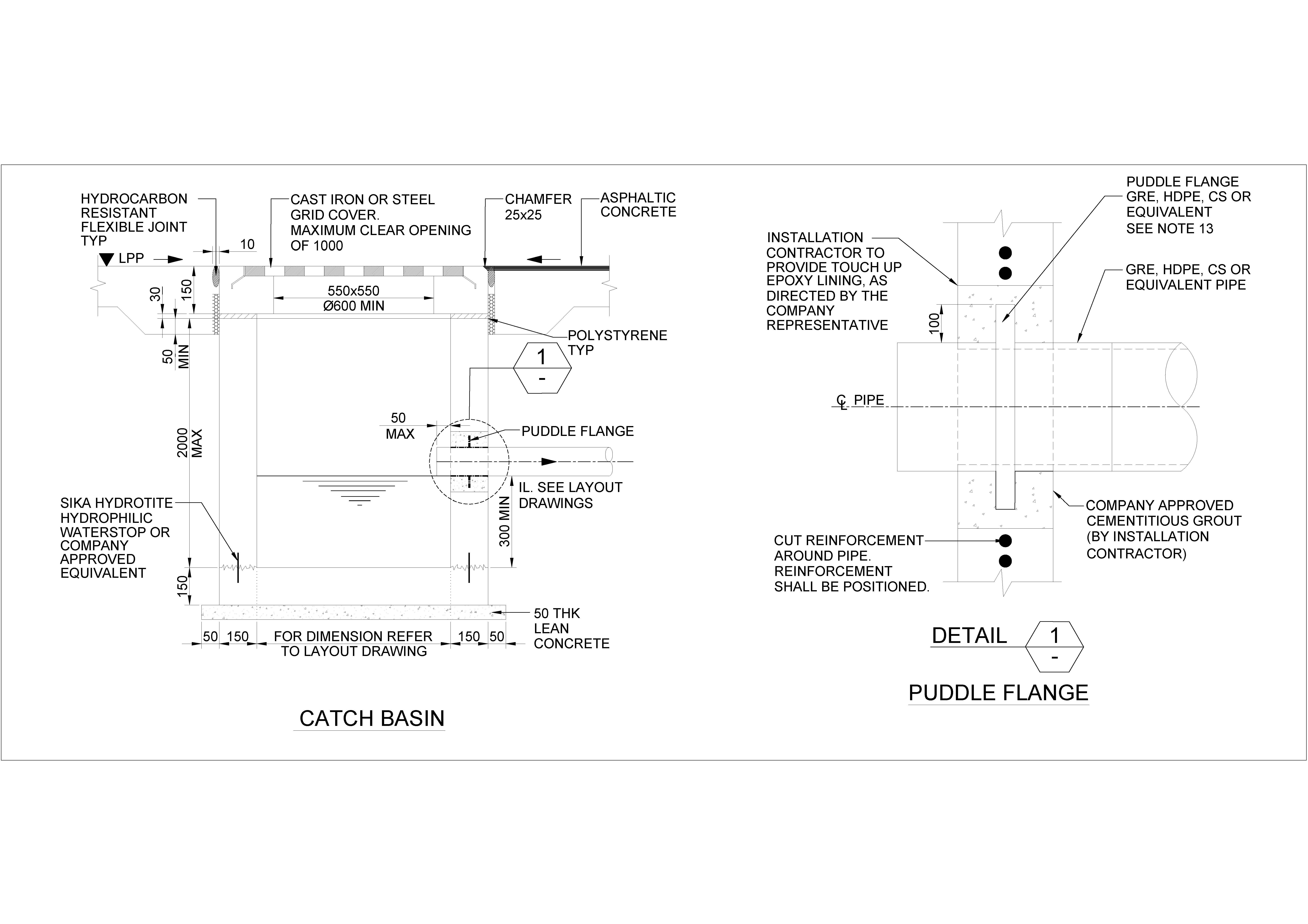
Catch basins are essential components of stormwater management systems. They collect and convey surface water from streets, parking lots, and other paved areas to prevent flooding and water damage. Understanding the types, components, and design considerations of catch basins is crucial for civil engineers, architects, and construction professionals. What is a Catch Basin? A catch Read more
-
Base Plate Design as per IS 800 2007

Introduction (Anchor Bolts Outside & Inside Column Flange) Base plates are critical steel connection elements used to safely transfer axial load, bending moment, and shear force from a steel column to the concrete foundation.As per IS 800:2007 – General Construction in Steel, base plate design ensures adequate bearing, bending resistance, and anchorage safety. This article Read more
-
Analysis and Design of Drain Sump Pit

Introduction A sump pit, commonly used in buildings, industrial plants, and utility areas, serves as an underground water collection tank designed to temporarily store rainwater, wastewater, or stormwater. Proper structural and RCC design of a sump pit is crucial to withstand soil pressure, groundwater uplift, and water-retaining conditions. This document outlines the structural analysis, RCC Read more
-
Ring Wall Foundation Design

✅ Overview A Ring Wall Foundation is a circular or polygonal concrete foundation, commonly used to support vertical cylindrical structures such as storage tanks, silos, chimneys, or wind towers. It provides uniform load distribution and stability against uplift, settlement, and sliding. 🧱 What is a Ring Wall Foundation? Ring wall foundation is a closed-loop footing, Read more
-
PILE STIFFNESS CALCULATION

STAAD INPUT FOR SUPPORT CONDITION VERTICAL STIFFNESSAllowable vertical settlement = 12 mmAllowable vertical load (2000*1.5) = 3000 kN Cl. 6.1.5, IS:2911 (Part 4)-1985 Vertical stiffness = 3000×103/12= 250000 kN/m Horizontal STIFFNESSAllowable lateral deflection = 5 mmAllowable lateral force = 120 kN Cl. 7.4, IS:2911 (Part 4)-1985Horizontal stiffness = 120×103/5= 24000 kN/m Error! Filename not specified. Read more